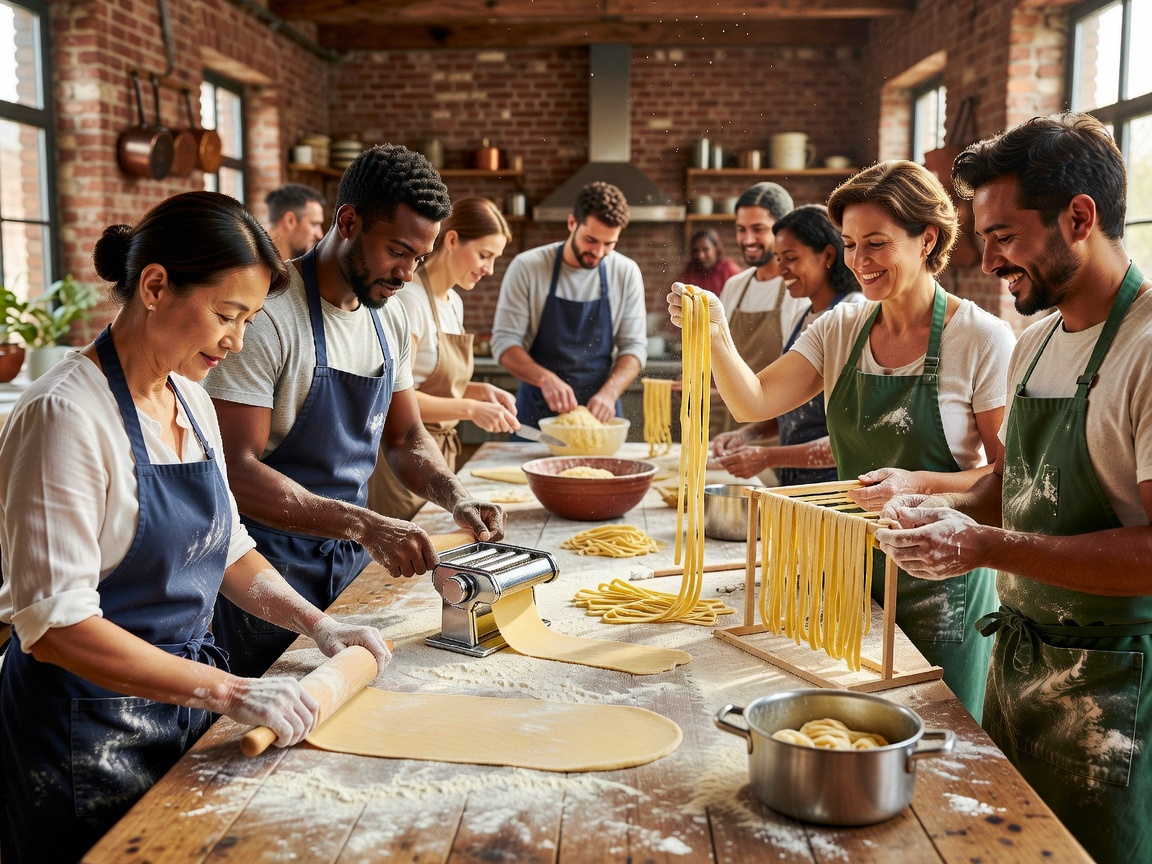
Recreational cooking courses range from an evening introduction to a full weekend workshop. Some centre on one dish or ingredient. Others build a sequence of preparations around a cuisine. The right choice depends on how much you want to practise, not only on the menu title.
Demonstration-led or hands-on?
In a demonstration-led class, an instructor performs most of the preparation while learners observe, taste or take notes. This can suit a first encounter, a complex menu or a short social session. It offers a clear view of technique but limited repetition.
Hands-on classes divide ingredients, tools and tasks among learners. They create more opportunity to cut, mix, shape, season and plate. Shared stations can also mean waiting, so ask whether each participant completes every key stage. A mixed format often combines a concise demonstration with supervised practice.
Format, duration and group design
Evening sessions are convenient for one technique or a compact menu. Weekend courses allow more preparation, resting, proofing and reflection. Private sessions may allow a narrower brief and a slower pace. Family-friendly formats should state age guidance, task design and supervision expectations rather than assuming every activity suits every child.
- Check the total duration and breaks.
- Ask how many people share a workstation.
- Confirm whether ingredients are pre-portioned.
- Find out if recipes or notes are supplied.
Equipment, access and dietary information
Many recreational courses provide common equipment and ingredients, but this varies. Ask whether you should bring a knife, apron, containers or closed shoes. Describe dietary requirements before booking. A stated allergen process is useful, but no course description replaces your own careful discussion with the provider.
Accessibility includes more than step-free entry. Consider bench height, seating, visual demonstrations, hearing support, room layout, breaks and the physical demands of the task. Ask directly what adjustments are possible.
Good for
These formats suit beginners, hobby cooks, small groups and learners testing a cuisine before committing to longer study. They may be less useful if your goal requires extended repetition, formal assessment or advanced station speed.
What to know
Clarify the teaching language, menu scope, hands-on ratio, group size, equipment, ingredient substitutions and cancellation terms. Read the course description as an operating plan: what happens first, what you do yourself and what leaves the kitchen with you?
Compare the subject with our regional cuisine guide and use the planning checklist before making an enquiry.