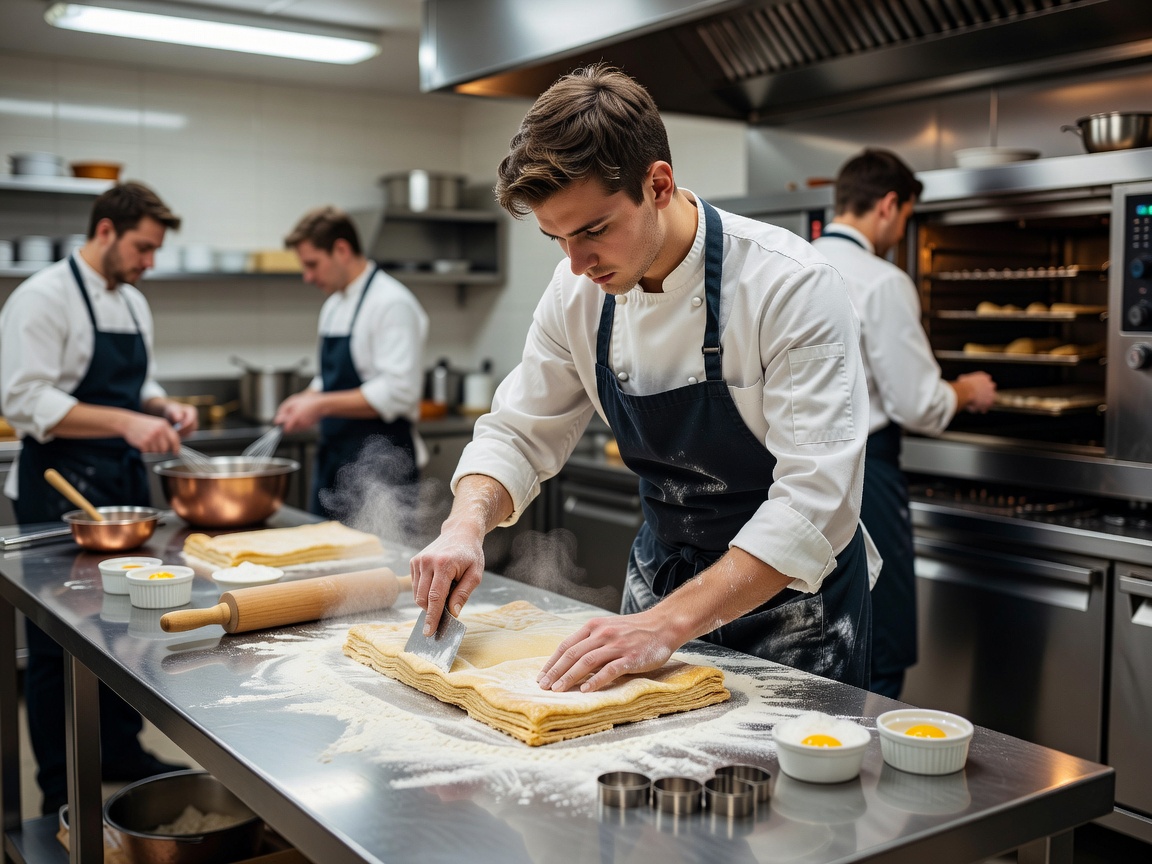
Short professional courses sit between casual instruction and long formal study. They usually concentrate on a defined block of work: foundational cookery, pastry, bread, menu preparation, sauces or kitchen organisation. The useful question is not whether a course sounds intensive. It is whether its timetable gives enough repeated practice for the stated technique.
What the training can cover
Foundational courses may address mise en place, knife handling, heat control, seasoning, stock, basic sauces and orderly station work. Pastry and baking routes often focus on dough development, mixing methods, shaping, proofing, lamination and finishing. Menu-focused courses connect preparation with sequencing, portion control and service timing.
Course descriptions should make the practical balance clear. A demonstration can explain a method, but competence develops through supervised repetition. Ask how much time is spent at the bench, how groups share equipment and whether learners complete a full preparation or only observe selected stages.
Intensity and prior experience
Intensive formats compress several skills into a short period. That can suit a working cook who needs a targeted refresher, but it can overwhelm a beginner. Check assumed knowledge, daily start and finish times, standing requirements and the amount of independent work between demonstrations.
- Beginner professional route: prioritise foundations, hygiene, station setup and clear tutor feedback.
- Developing cook: look for repetition, timing exercises and linked preparations.
- Experienced learner: seek a narrow technical focus rather than a broad introduction.
Equipment, workflow and assessment
Equipment may be supplied, shared or partly learner-provided. Confirm the arrangement for knives, uniform, containers, baking tools and digital recipe material. A professional kitchen also requires practical clothing, secure footwear and attention to local safety rules. Follow qualified instruction, equipment manuals and the kitchen’s hygiene procedures.
Assessment does not have to mean a formal qualification. It may be an observed task, a completed preparation, tutor feedback or a written reflection. Do not assume that attendance creates a regulated credential. Ask what is recorded and how feedback is delivered.
Good for
These courses can suit cooks who want a compact skills block, a structured practice environment or a clearer view of professional workflow. They are less suitable when you need a broad, slow introduction or cannot commit to the physical schedule.
What to know before booking
- Required experience and language of instruction.
- Daily timetable, station ratio and practical hours.
- Equipment, clothing and ingredient arrangements.
- Physical access, standing expectations and break structure.
- Feedback or assessment format, without assuming accreditation.
Use the course planning guide to compare logistics, then review core culinary techniques before contacting a provider.
Need a clearer shortlist?
Send your goal, level and preferred format. We can help frame the questions to ask.
Contact the guide