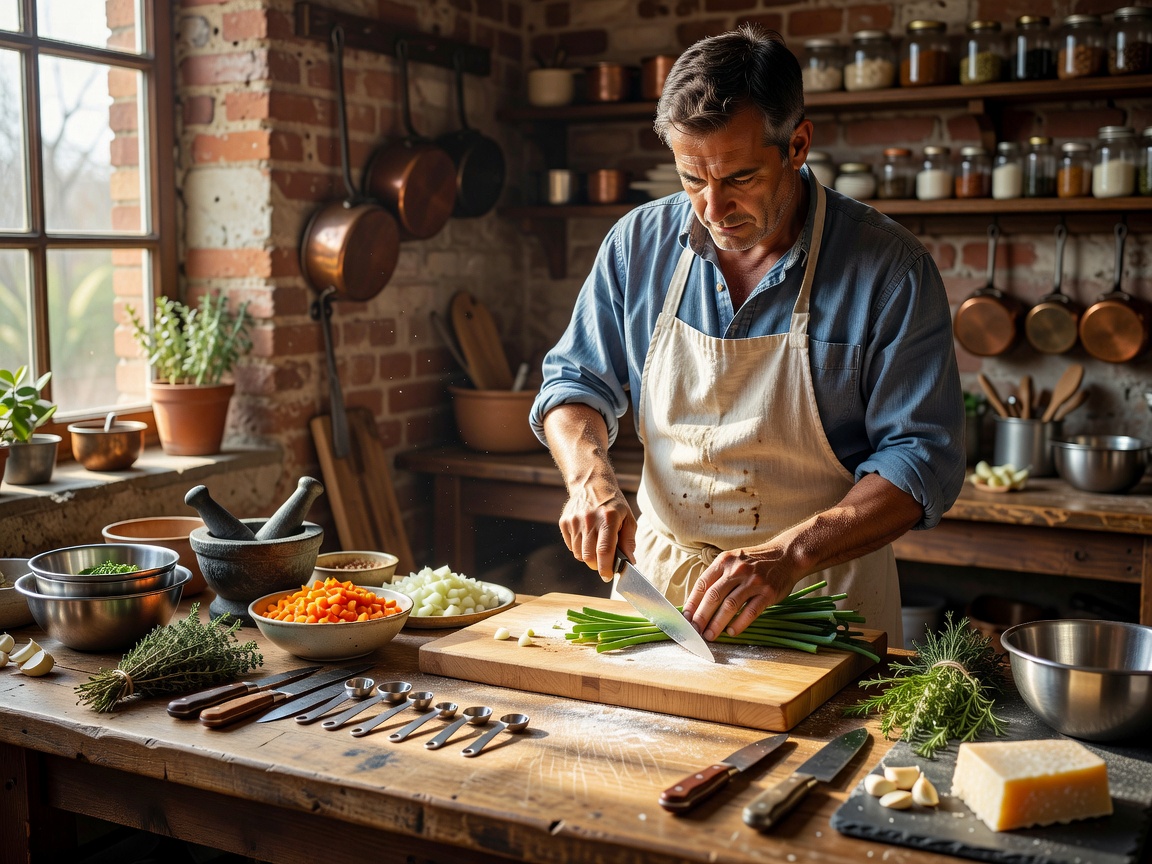
A technique is more than a recipe instruction. It includes preparation, tool control, heat awareness, sequencing and evaluation. Courses may group related skills into a practical station: vegetables and knife work, dough and shaping, or sauces and seasoning.
Preparation and knife skills
Learners generally practise stable cutting-board setup, safe hand positions, consistent cuts and efficient transfer. The aim is control and repeatability, not speed for its own sake. A useful class explains how cut size affects cooking time and texture, while keeping safety guidance central.
Sauces, stocks and roasting
Sauce work can cover reduction, emulsification, thickening, seasoning and balancing texture. Stock and broth sessions may focus on ingredient preparation, extraction, straining and storage principles. Roasting lessons examine preparation, oven management, timing and resting. Follow the instructor’s equipment rules and manufacturer guidance; commercial ovens and machinery require qualified supervision.
Dough, pastry and baking
Dough courses often compare mixing, hydration, gluten development, resting and shaping. Pastry adds temperature control, handling pressure and precise rolling. Baking introduces measured ratios, proofing or leavening, oven timing and cooling. Learners benefit from seeing both a correctly developed mixture and common signs of under- or over-working.
Fermentation and preservation
Fermentation and preservation are broad subjects with different food-safety requirements. A responsible course explains controlled conditions, hygiene, storage, ingredient quality and when to discard a preparation. Do not improvise sealed vessels, pressure systems or preservation methods. Follow qualified instruction and local guidance.
Timing and station organisation
Good mise en place reduces unnecessary movement. Courses may ask learners to read a recipe as a timeline, group ingredients by task, clean between stages and coordinate shared equipment. This is where isolated skills become kitchen workflow: prepare, cook, check, adjust and finish in a sensible order.
Good for
Technique study suits beginners who want foundations and experienced cooks who need a targeted reset. It is less suitable when the course lists many skills but gives little bench time.
What to know
- Which techniques receive supervised repetition?
- What tools and heat sources are used?
- How are hygiene and safety taught?
- Is feedback individual, group-based or observational?
Compare the professional route at professional cooking courses and use the planning guide to check equipment and access.
Define the skill block.
Share the technique you want to practise and your current level.
Contact the guide